Understanding the Supply Chain Management Process
An overview of the supply-chain management process
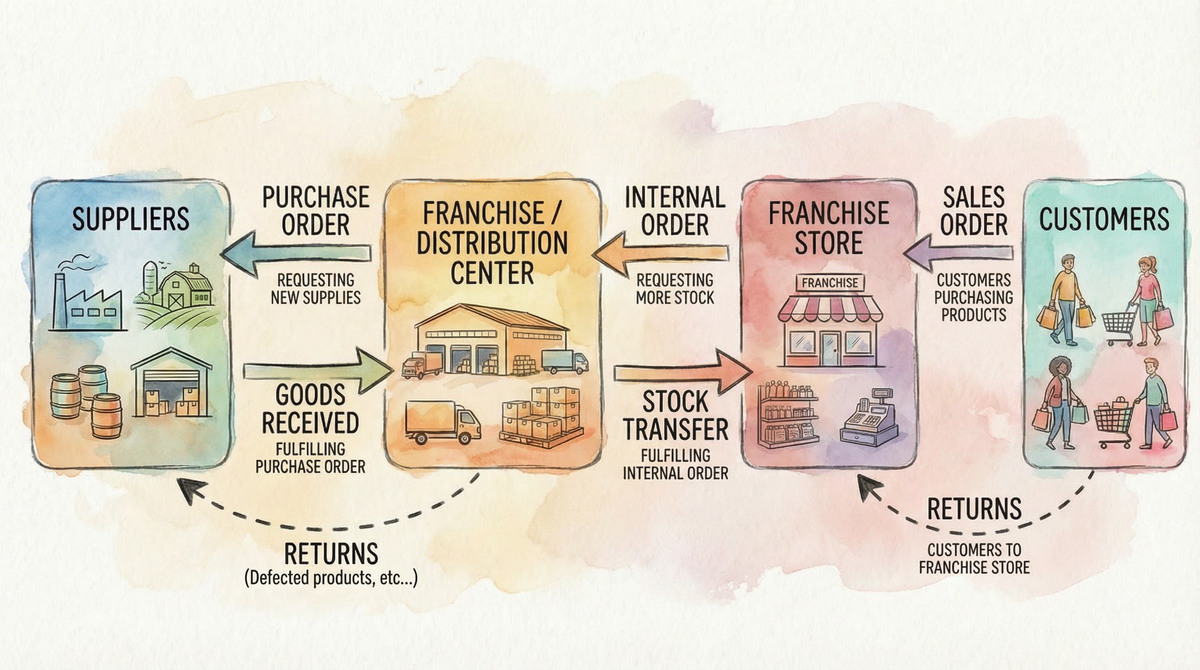
For franchise operations, a well-defined supply chain is the backbone of consistent product availability and customer satisfaction. Whether you are a franchisee managing a single store or overseeing multiple locations, understanding how stock flows from suppliers to customers is essential to running an efficient business.
This article breaks down the key stages of the supply chain management process within a typical franchise model.
The Key Players
Every franchise supply chain involves four core entities working together:
- Suppliers: external vendors who manufacture or distribute the products your franchise sells.
- The Franchise (Head Office / Distribution Center): the central body that manages supplier relationships, bulk procurement, and stock distribution across the network.
- Franchise Stores: individual retail locations owned by franchisees, responsible for selling products to end customers.
- Customers: the people who walk into your store and purchase your products.
How Stock Flows Through the System
1. Purchase Orders
The process begins with the franchise placing a Purchase Order with one or more suppliers. This is a formal request to procure products in bulk, typically at negotiated rates. Purchase orders are driven by demand forecasting, historical sales data, and inventory levels across the franchise network.
2. Goods Received
Once a supplier fulfills the purchase order, the stock arrives at the franchise's distribution center. At this point, a Goods Received process takes place. Staff verify the quantities and quality of the delivered goods against the original purchase order, resolve any discrepancies, and update the inventory management system. This step is critical. Skipping it leads to inaccurate stock records and downstream problems.
3. Internal Orders
When a franchise store needs more stock, the franchisee submits an Internal Order to the franchise. This is essentially a request saying "I need these products in these quantities." The franchise reviews and approves the request based on stock availability and allocation policies.
4. Stock Transfers
Once an internal order is approved, the franchise initiates a Stock Transfer. This moves inventory from the distribution center (or in some cases, from another store with excess stock) to the requesting store. The receiving store then confirms receipt and updates its local inventory.
5. Sales Orders
The final step in the chain is the Sales Order. This is created when a customer purchases a product from a franchise store. Sales orders reduce the store's on-hand inventory and feed data back into the system, informing future purchase orders and stock transfer decisions.
The Reverse Flow: Returns
No supply chain is complete without accounting for returns. Customer returns flow back into the franchise store's inventory (or are written off, depending on the product condition). In some cases, defective or unsold stock may also be returned from the franchise back to the supplier, depending on the terms of the purchase agreement.
Why This Matters
When each stage of this process is clearly defined and consistently followed, the result is predictable stock levels, fewer shortages, reduced waste, and a better experience for your customers. When any stage breaks down, whether it is a missed goods received check or an untracked internal order, the effects ripple through the entire chain.
For franchise operators building or refining their systems, mapping out these stages is the first step toward a scalable, reliable supply chain.